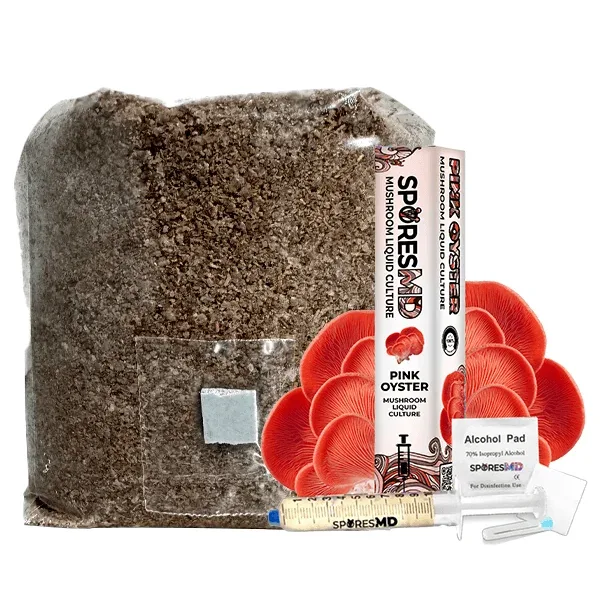
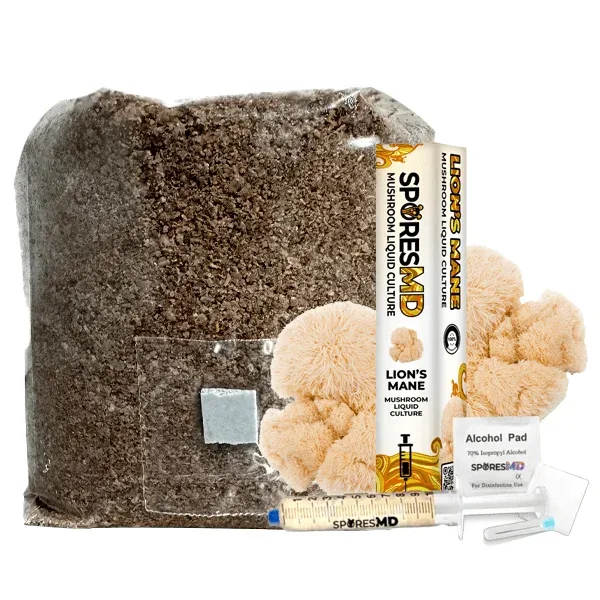
How to grow lion's mane mushrooms at home comes down to two routes on our mushroom grow kits page: an all-in-one lion's mane kit, or a grow bag with a lion's mane liquid culture bought separately. Lion's mane (Hericium erinaceus) grows as white clumps of hanging spines rather than caps, and the seller's kit listing describes it as thriving in cool, humid conditions. The table sets the three products side by side, with the seller's figures.
| Product | Price | What comes in it, by the listing | What you still need | | --- | --- | --- | --- | | Lion's mane grow kit | $44.99 | A grow bag of hardwood blend, a 10 ml lion's mane syringe, alcohol prep pads, a resealing injection port, a filter patch and an instruction card | Nothing, by the listing | | Gourmet grow bag (Wood Lovers) | $39.99 | A sterilized hardwood sawdust bag with a resealing port and a filter patch | A culinary culture, sold separately | | Lion's mane liquid culture | $19.99 | A 10 ml syringe of lion's mane culture | A grow bag or other hardwood substrate |
Kit or bag and culture: what each costs
The kit is one purchase at $44.99. The grow bag and the culture together come to $59.98. The bag listing takes 2 to 3 ml of culture per bag and the culture listing 1 to 2 ml, so a 10 ml syringe holds enough for several bags at the listings' own figures. For a first grow, the kit costs less; for repeat grows, one syringe spreads across more than one bag.
The seller does not state a yield for the kit or the bag, so a cost per pound of fresh lion's mane cannot be worked out from the listings. For comparison with lion's mane sold ready to take, our functional mushrooms page lists capsules and gummies made with lion's mane; the last row of cards below shows three of them with today's prices.
The steps, by the seller's listings
- Inoculate. The kit comes with its syringe and a resealing port; the culture listing calls for hardwood sawdust or a hardwood mix, and the bag listing says to wipe the port with an alcohol pad before the needle goes in.
- Colonize in the dark. The culture listing puts colonizing at 65 to 75°F in a dark spot with high humidity, over the next few weeks. The bag listing allows 2 to 4 weeks for the mycelium, depending on the species.
- Move to fruiting. Once the bag is fully white, the culture listing calls for fresh air, indirect light, 85 to 95% humidity and 60 to 75°F.
- Harvest. The culture listing says to cut the mushrooms at the base and use them fresh or dry them for storage.
How lion's mane differs from the oyster kits
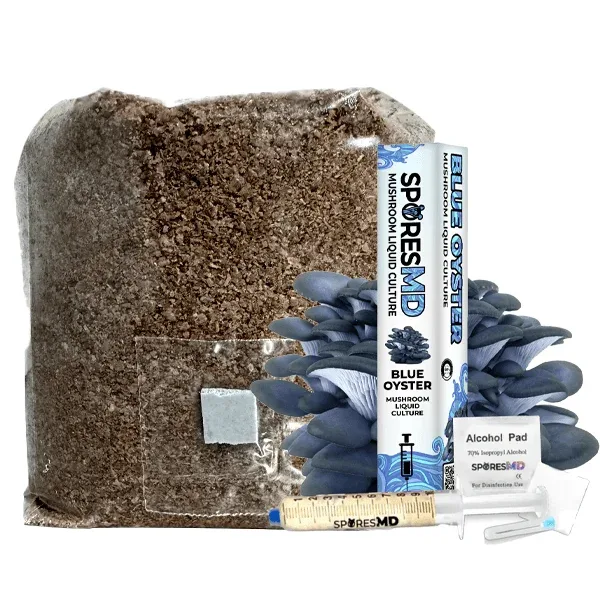
The kit listing describes lion's mane as slower than the faster-growing varieties, and our mushroom grow kit for beginners guide puts it among the patient ones beside king oyster and antler reishi. By the seller's culture listings it fruits at 60 to 75°F, the same range as golden oyster; blue and king oyster fruit at 60 to 70°F, and pink oyster and antler reishi at 65 to 75°F. The mushroom liquid culture guide compares the lion's mane culture with the five other culinary cultures.
Spore syringes, prints and swabs listed by the seller for microscopy are on a separate page, spores and cultures (microscopy).
Three lion's mane recipes
The seller compares the flavor to seafood and suggests soups, stir-fries and dishes where it takes the place of meat. These three are our own, written for one fresh clump of about half a pound.
Seared lion's mane steaks. Slice the clump into slabs about an inch thick. Press each slab in a dry, hot skillet with a heavy pan or spatula for a few minutes a side, until it gives up its water and browns. Add a tablespoon of butter or oil, a pinch of salt and a crushed garlic clove, and baste for another minute. Serve with lemon.
Lion's mane cakes. Pull the clump into shreds with your fingers and cook the shreds in a dry pan until their water is gone. Let them cool, then mix with one egg, a quarter cup of breadcrumbs, a tablespoon of mayonnaise, a teaspoon of mustard and your seafood seasoning. Shape four small cakes and fry them in oil until golden on both sides.
Garlic butter lion's mane for pasta or soup. Tear the clump into bite-size pieces and brown them in a tablespoon of butter over medium-high heat, stirring now and then. Add a minced garlic clove and a little parsley for the last minute. Toss with pasta and a spoon of the pasta water, or drop the pieces into a bowl of broth.