Topical CBD is one of the most misunderstood product categories in the hemp space. People expect it to work like an oral tincture — it does not. Understanding how topical CBD actually works helps you set realistic expectations and choose the right product for your needs.
How Topical CBD Works
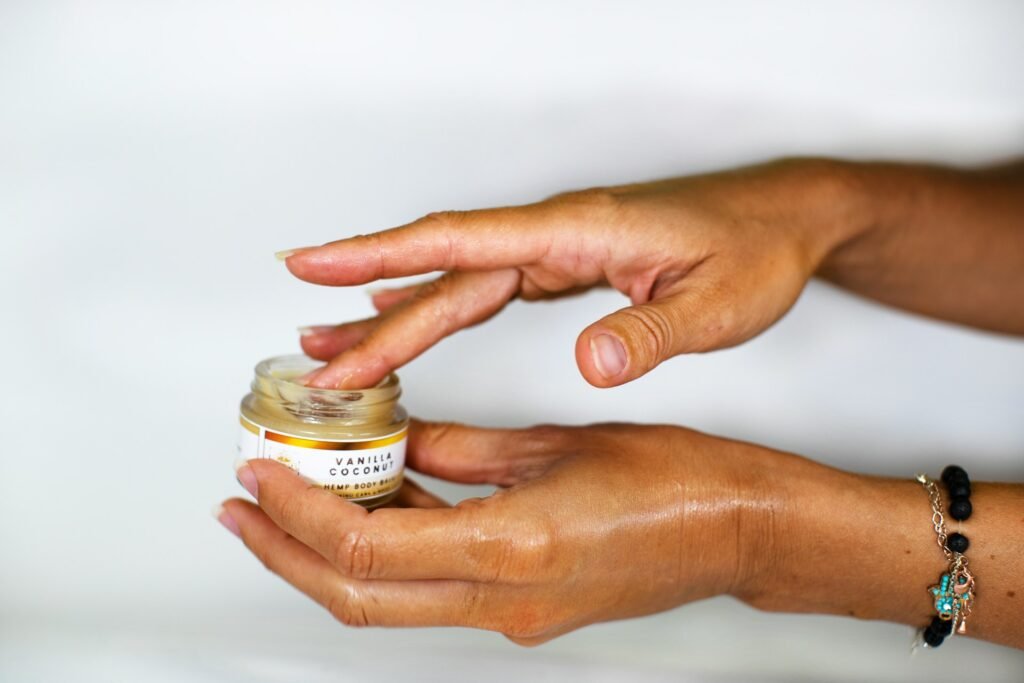
When you apply a CBD cream, salve, or roll-on to your skin, the CBD does not enter your bloodstream in any meaningful amount. Instead, it binds to cannabinoid receptors in the skin, muscles, and surrounding tissues — working locally without systemic effects.
This makes topical CBD fundamentally different from tinctures or gummies. You will not feel a “head effect.” What you may notice is localized relief in the area where you applied it — reduced tension, a cooling or warming sensation, and support for skin health.
Who Uses Topical CBD
The most common use cases for CBD topicals include:
- Post-workout muscle soreness — applied to worked muscle groups after exercise
- Joint stiffness — particularly popular with older adults and those with arthritis
- Localized tension — neck, shoulders, lower back
- Skin wellness — some CBD creams are used for dryness, irritation, and general skin health
What Makes a Good CBD Topical
CBD Concentration
Concentration matters more with topicals than almost any other CBD format. A 200mg cream in a 4oz jar is barely measurable per application. Look for products with at least 500mg per container, ideally 1000mg or more for meaningful effect.
Delivery Enhancers
The best topicals pair CBD with ingredients that enhance absorption and add their own benefits:
- Menthol — cooling sensation, increases blood flow to the area
- Arnica — traditional botanical for muscle and bruise support
- MSM — sulfur compound used for joint support
- Emu oil / MCT oil — carrier fats that improve CBD penetration
Full Spectrum vs. Broad Spectrum
For topicals, full-spectrum CBD (with trace THC) may provide a better “entourage effect” — where cannabinoids and terpenes work together. Since topicals do not enter the bloodstream, trace THC in a topical will not cause psychoactive effects and should not appear on a drug test. That said, broad-spectrum topicals are also effective and the safer choice if you are concerned about any THC exposure.
Top Topical CBD Picks
- CBDfx CBD Freeze Roll-On — cooling menthol roll-on for targeted application, zero THC, widely trusted brand
- CBDfx CBD Freeze Roll-On — USDA organic hemp, GMP-certified, full-spectrum formula
- NuLeaf Naturals CBD Balm (Full Spectrum) — Colorado-grown hemp, rich botanical blend with beeswax and arnica
How to Use CBD Topicals Effectively
- Clean and dry the area before applying
- Apply a generous amount — do not be shy with dosing
- Massage in thoroughly for 1–2 minutes to aid absorption
- Allow 15–30 minutes before evaluating effect
- Reapply as needed — topicals wear off faster than oral CBD
Browse our full Topical CBD collection →
Disclaimer: These statements have not been evaluated by the FDA. CBD topicals are not intended to diagnose, treat, cure, or prevent any disease.